







Opening Times
- Mon - Sat
- 9.00am - 5.30pm
- Sundays
- Closed






Same Range
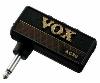
Vox amPlug£36.375
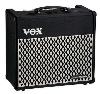
Vox Valvetronix VT30£146.25
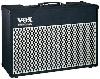
Vox Valvetronix VT50£213.6
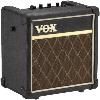
Vox Vox DA5 Classic£82.215
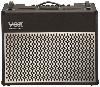
Vox Valvetronix VT100£384

Vox Valvetronix VT15
Other Options
£145.00
Vox VX15GT 15w Modeling Guitar Amplifier--Available Now--
£121.8828
Blackstar Fly 3 Stereo Pack--Available Now--
£89.00
Blackstar Debut 10E Electric Guitar Amplifier--Available Now--
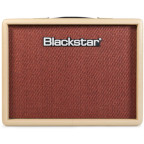
£85.00
Blackstar Debut 15E Electric Guitar Amplifier--Available Now--
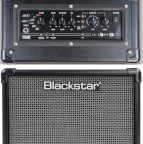
£130.7904
Blackstar ID Core 10 V4 10w Stereo Combo Amplifier--Available Now--
| info |
|---|
Vox Valvetronix VT15s from A&C Hamilton Preston
| With sound quality that overpowers its rivals I like to play loud and as we all know valves like to be played loud . However Mums Dads or in my case girlfiends dont always appreciate my awesome technique at full volume. The Valtronix AC15 is the answer to my dream, I can push the valve and tone to extreme and although Im not as loud as Id like to be I dont have a bruise from the frying pan on my head and I do get the tone. The Valvetronix VT15s power break is a godsend |
|
Sound Great with This Very Portable 100-watt Modeling Amp!The Vox Valvetronix VT15 100-watt modeling guitar amplifier combo packs great amp and effects models into a 2 x 12\" combo that packs a real punch!The Valvetronix VT15 gives you 22 amp models, 12 effects (including independent reverb), and a total of 66 presets for an incredible amount of flexibility onstage, in the studio, or in the practice room. Its onboard 12AX7 tube gives you that magical tube amp response - and you can even choose the output wattage to take advantage of those characteristics at low volumes. Its 2 x 12\" speaker configuration makes the Valvetronix VT15 sound full, too. |
Vox has a heritage that no other music company can boast.Throughout the 1960's it was one of the greatest innovators of music technology and the name Vox was associated with many top and new artists of the decade such as The Rolling Stones, The Beatles and The Shadows. Over fifty years later, after six changes of ownership, it is still surviving in what has become one of the worlds most competitive markets. Now there is a whole new generation of Vox users, many because of their aspirations and respect for the many artists who rely on Vox for their sound. So here is a brief overview of the history of Vox and how it became one of the best-know amplifier brand. |
VT15 Twenty-two amp modelsuse high-quality modeling technology Another indispensible aspect of the Vox VT15 Valvetronix is the modeling technology that is the source of its diverse amp sounds. The sounds of twenty-two tube amps sought-after by the guitarists are built in, including vintage amps that are now hard to find, as well costly boutique amps. The coverage includes not only vintage types, but also the latest high-gain types, accommodating a wide variety of playing techniques and styles. |
Key Features of the Vox VT15 Valvetronix 15W Guitar Amp Combo
|
VT15 Twelve high-quality effects deliver the essentials with plenty of variationEffects are an important part of creating your guitar sound. The Vox VT15 guitar amp contains twelve effects with quality rivaling that of dedicated stand-alone processors, ranging from familiar standards to fresh new types. Of these, the reverb effect is always available, and three of the other eleven types are composite effects that allow up to three effects to be used simultaneously. Noise reduction can also be used at the same time. Each effect has multiple parameters that you can adjust to create the precise sound you want. Theres also a tap switch that makes it easy to set the delay time or modulation speed. Independent reverb is provided, giving you an even broader range of sound-creating possibilities. |
Optional VFS5 foot switch lets you switch programs or turn effects on/off with your footBy using the optional VFS5 foot switch you can switch programs, turn reverb or other effects on/off, or make speed/tap settings using your foot. This is a great advantage when youre creating sounds or performing live.Headphone output and expandability allows home recording and late-night practiceTheres a headphone output that can be connected to headphones or to your mixer or multi-track recorder. Since the tonal characteristics of the cabinet are applied to this output, the sound will not be impaired even if you make a direct-line recording or listen through headphones, ensuring that you continue to get that great spatial depth and character. The VT50/100 provides a speaker output that allows an external speaker to be connected, and the VT15 provides an effect loop thats convenient for connecting an external effect, giving you the flexibility to configure your system for any situation. |
| The 60s and 70s 1961 Elvis Presley's "Are You Lonesome Tonight" is #1. The first Vox guitar were now on sale. The Stroller and the Clubman. These were low cost budget models made for Vox by a furniture maker, and were comparable to other similar models available at the time. 1962 The Beatles record \"Love Me Do\" using at least one fawn AC15. Not content with making low cost guitars that looked like American imports, Tom Jennings decided that a more original design of higher quality was needed. After teaming up with Italian guitar maker, EKO to provide the necks, one of Vox' most famous guitars appeared in late 1962. With a trapezoid shaped body it was named the Vox Phantom. Also in 1962, AC30's started to be made covered in black vinyl as well as the usual blonde vinyl and the Beatles start a long a prosperous association with Vox taking delivery of some new AC30s. 1963 The Phantom was now very successful and used by many top artist of the era including the Dave Clark Five and the Hollies. Late 1963 Vox produce the Phantom Mk III guitar. Completely different in shape to the early Phantom guitar, this rounder, lute shaped instrument went on to become Vox's most famous guitar shape. Soon it was simply known as the "Teardrop" guitar. The very first hand built example was used and made famous by Rolling Stones founder member Brian Jones. Semi-acoustic guitars were also very fashionable and the Vox Victor was made in the style of a Hofner and the Vox Verithin that was more like a Gibson 335. The black coloured AC30s were now very popular and soon the blonde coloured ones were phased out and a new Vox amplifier arrives, the AC50. 1964 Cassius Clay becomes heavyweight champion when Sonny Liston throws in the towel in the sixth round The success of the Vox guitars meant that the range would expand. And soon there were not only 6-string lead and 4-string bass version of the Phantom and Teardrop but 12-string versions. Also by 1964 Vox were making a short scale 12-string guitar know as the "Mando" guitar because of its mandolin style attributes. A major part of the Jennings Musical Industries business at the time was still electronic organs. Earlier in 1962 the Continental I organ was launched but because of the strong Vox name it was marketed as the Vox Continental I organ. The technology from this organ led to one of Vox's really true innovations of the time. The Vox Guitar Organ was a guitar that contained the oscillator circuits from the Vox continental organ. By holding down the strings, the organ tone would sound and could be combined with the sound of the guitar. Dick Denny continued to be creative and soon the Vox catalogue contained the Vox Echo machine, Vox Radio Microphone and the first Vox transistor amplifier, the T60. Also, the Top Boost add-on for AC30's was now integrated into the design and construction of the AC30, and it became known as the AC30 Top Boost. |
The sound of the Vox Continental found more success with The
Animals reaching number one with "The House of the Rising Sun".
Also at the same time is could be heard on Manfred Mann's "Do Wah
Diddy Diddy" and the Zombies' "She's Not There". Other
Vox models of note to appear in 1964 were the Foundation bass speaker cabinet
and the AC100 head that was designed to be used with the new Beatle speaker
cabinet. In need of further financial investment and also with a fear that the
golden age of pop maybe short lived, Tom Jennings looked for perspective buyers
for his business. During 1964 the Royston Group acquired a substantial shareholding. With the success of the Beatles in the U.S. and subsequent demand for Vox products by U.S. importers, a deal was made with the Thomas Organ Company to import Vox into the USA. More premises were now needed and manufacturing works in West Street, Erith were made available with the help of the Royston Group. 1965 The Beatles appear on The Ed Sullivan Show, performing songs from their new album Help! The Thomas Organ Company began to supplement the imported Vox valve amplifiers from the UK with their own U.S. made transistor models design by their laboratories at La Sepulvenda. The Super Beatle amplifier appears with a host of features including built-in tuning tones and a Hammond licensed reverb effect. The Thomas Organ Company pay a large licensing fee to the Royston Group and Jennings loses control of Vox in the U.S. All U.S. amplifier models soon become transistors based. 1966 The Thomas Organ company expanded the range and the 4 and 7 series amplifiers were added to the catalogue. 1967 The first issue of Rolling Stone magazine is published With Dick Denney's help a range of UK solid-state amplifier were soon on sale in the UK. The Conqueror (30 watts), Defiant (50 watts) and Supreme (100 watts) were three lead guitar models that had unique, at the time, features like distortion, tremolo and a Vox reverb. Also, three bass model were added, The Dynamic (30 watts), Foundation (50 watts) and Super Foundation (100 watts). Due the cost of the Alnico magnets, the Vox Blue speaker was phased out and replaced by cheaper ceramic magnet speakers. With a complete catalogue of transistor amplifiers, the great valve Vs transistor debate started amongst guitarist and with most favouring valves, Vox started to loose some reputation for sound quality. Not helped by the advent of Hard Rock with legends such as Hendrix and Cream favouring amplifier made by the competition. The Wah-Wah made its first appearance. Designed to emulate the sound of a muted trumpet the Vox Wah-Wah pedal was one of Vox's most innovative and successful products. With the Royston Groups take over of Vox and the Thomas Organ Company's control of Vox's U.S. operation, Tom Jennings resigns. 1968 The Bill Wyman bass arrives and the Royston Group invest heavily in other areas outside the music industry, but these investments did not pay off and some major contracts were lost. 1969 Astronaut Neil Armstrong becomes the first man to walk on the Moon. Woodstock Music and Art Fair Royston Industries go into liquidation and are put into the hand of the receiver. After nine mouths of uncertainty the Corinthian Bank becomes the new owner of Vox. The name changes to Vox Sound Ltd. 1970 Vox Sound Ltd is sold to a consortium comprising of John Birch and George Stowe of Stolec Electronics and the Schroder Bank. Manufacturing was moved to Hastings where a few organs and the AC30 were made. The AC30 now included reverb and was manufactured using a printed circuit board (PCB). The valve rectifier was also removed and replaced by a solid state device. 1972 CBS Arbiter, the UK Fender importer make an offer to buy Vox Sound Ltd. Accepted by George Stowe, Vox has a new owner for the forth time. Production moved to the Dallas Arbiter factory in Shoeburyness where their own version of the AC30 was made. In a cost cutting exercise some features were change much to the annoyance of AC30 fans. The cabinet was now made out of particleboard as opposed to plywood making it heavier and weaker. In 1972 Vox had the good fortune to team up with Brian May of the group Queen. Combining multiple AC30 with a unique playing style, the image of Brian May backed by a stack of AC30s provided excellent and much needed promotion for Vox. Arbiter reintroduces the Vox organs with the re-issue of the Continental I and Continental 300. A new version of the AC50 was made and a new amp the V100 was made but short-lived. A mini AC30 was made that had a 2.5-watt output and was battery powered. Soon a mains option was added and the Vox mains/Battery amplifier was named the Escort. 1975 Vietnam War ends for the US. The Vox Escort 30 appears a 30 watt transistor amplifier cosmetically styled like an AC30. By now a Solid State version of the AC30 was available, the AC30SS and although it did not sound like a real valve AC30 at the time it was good valve for money. 1978 First test-tube baby CBS-Arbiter had by now had a fair attempt at reviving the Vox brand, and new models like the AC120 amp, Italian made pedals including a Wah-Wah and the tone bender had appeared. But with live music declining and strong competition from other music companies a decision was made to sell Vox Sound Ltd. |
VOX Valvetronix VT15 Specifications
- [Amp Models] BOUTIQUE CL,DELUXE TWEED,SUPER 4X10,AC15TB,AC30HH,EXPRESS TRAIN,AC50CP2,UK 25TH,US 90S,UK MODERN,BOUTIQUE METAL,MODDED CL,TWEED 2X12,TWEED 4X10,AC15,AC30TB,BOUTIQUE OD,AC30BM,UK 80S,CALI METAL,UK 90S,METAL BULL
- [Effect Models] DELAY,TAPE ECHO,CHORUS,COMP,OCTAVE,FLANGER,PHASER,ROTARY,TREMOLO,PITCH,REVERB, NR(Noise Reduction)
- Number of amp types: 22
- Number of effects: 12
- Number of programs: 66 preset,
- 8 user Input/output jacks: 1x INPUT,1 x FOOT SW jack, 1 x PHONE jack, 1 x EXTERNAL SPEAKER OUT jack, 1 x LOOP RETURN jack, 1 x LOOP SEND jack
- Power amp output: maximum 100W RMS @8 ohms Speaker: 2 x VOX original (12 inch,8 ohm)
- Signal processing A/D conversion:
- 24-bit, D/A conversion: 24-bit, Sampling frequency: 44.1 kHz
- Power supply requirements: AC, local voltage Included items: power cable
- Options(Sold separately): VOX VFS5 foot switch


